Premium Dairy Beef Feed Program
The NEMO Feed Dairy Beef Program is a comprehensive, birth-to-finish feeding solution designed to help producers raise healthy, fast-growing dairy and dairy-beef calves with maximum efficiency and profitability. Using specially formulated pellet supplements mixed with whole shelled corn, this no-forage program simplifies management while supporting optimal weight gain, gut health, and animal well-being. From young calf care through the finishing phase, NEMO Feed provides tailored feeding strategies, best practices, and expert support to help you get the most out of every calf.


MAXIMIZED
DAILY GAIN
Formulated to encourage high intake and rapid weight gain from day one—no intake limiters, just efficient growth.

Simplified Feeding Strategy
A pellet-and-corn-based program eliminates the need for forage, reducing complexity, cost, and equipment requirements.

BUILT-IN HEALTH
PROTECTION
Enhanced with vitamins, minerals, ionophores, micro ingredients, and fly control to promote gut health and disease resistance.
Noteworthy Features of NEMO Dairy Beef FOrmulas
- Unlike competitor products, the NEMO Feed Dairy Beef line does not contain ingredients to limit intake. Rather we aim to achieve the highest intake possible which translates into larger daily weight gain.
- Proper use of ionophores to improve animal performance and control coccidiosis.
- Targeted use of micro ingredients to naturally promote gut health and reduce pathogen load.
- Formulated to supply adequate levels of macro minerals due to low mineral content of corn grain.
- Heavily fortified with a blend of vitamins, as well as organic, hydroxy, and sulphate minerals to support health and growth.
- Use of proven mold inhibitor to extend shelf life.
- During warm weather, diflubenzuron is included to help reduce fly populations.
Young Calf Guide
Birth to 5 Months
Dairy steers and dairy-beef crossed animals are a valuable co-product to dairy production. When fed and managed correctly, our clients can grow new born calves to well over 400 lb before they reach 5 months old. Average daily gain will be 2.5 to 3 lb per day.
To achieve the best return on investment from dairy beef, one needs to manage them different than a native beef animal.
NEMO Feed has specially formulated supplements that are mixed with whole shelled dry corn to become a complete feeding program from birth to finishing. For ease of management, forage of any type is often never fed to these animals.
To make 1 ton of feed, carefully mix ingredients according to the feeding table shown below. Take care not to overmix so the pellets remain intact. The complete feed will look like the picture shown.
The daily intake column is intended as a guide only; offer feed free choice so that calves never run out, and expect intake to fluctuate with environmental conditions.
Feed alongside 20/20 milk replacer for the first six weeks of life. Feed 3 quarts of milk replacer twice daily. Whole milk, or a higher-spec milk replacer, is acceptable, but generally speaking, a 20/20 formula is adequate to meet calf maintenance needs until dry feed consumption ramps up.
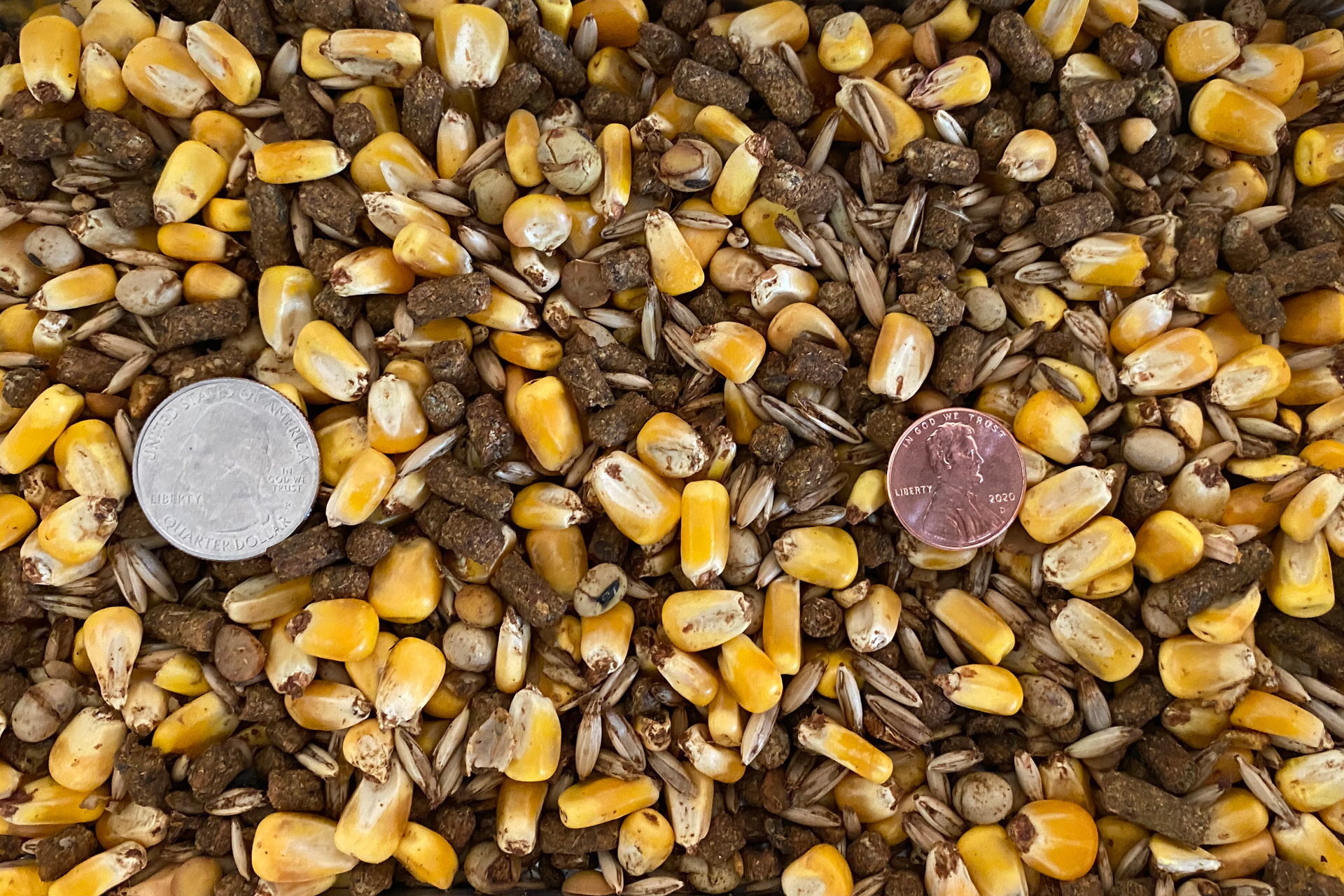

MAKING A TEXTURED DAIRY BEEF FEED ON FARM USING NEMO'S 28% DB PELLET
| Pounds Per Ton of Each Product | ||||||
| Animal Weight & Age | NEMO Feed 28% DB Pellet | Oats | Roasted Soybeans | Whole Shell Corn | Approx. Daily Intake Range | |
| 85–175 lb Birth–2 mo | 610 | 275 | 225 | 890 | 1–5 lb | |
| 175–295 lb 2–3.5 mo | 550 | 275 | 125 | 1,050 | 5–10 lb | |
| 295–435 lb 3.5–5 mo | 500 | 60 | 65 | 1,375 | 10–14 lb | |
If your farm does not have roasted soybeans on hand, use NEMO Feed’s 30% DB Concentrate Blend. This is a texturized blend and contains roasted beans.
Making a Textured Dairy Beef Feed On Farm Using Nemo’s 30% DB Pellet
| Pounds Per Ton of Each Product | |||||
| Animal Weight & Age | NEMO Feed 30% DB Pellet | Oats | Whole Shell Corn | Approx. Daily Intake Range | |
| 85–175 lb Birth–2 mo | 900 | 275 | 825 | 1–5 lb | |
| 175–295 lb 2–3.5 mo | 725 | 265 | 1,010 | 5–10 lb | |
| 295–435 lb 3.5–5 mo | 600 | 75 | 1,325 | 10–14 lb | |
For feeding animals larger than 435 lb, see the Grower and Finisher Guide two sections below.
Estimated Costs*
| Category | Calculation | Example Values | Real-Time Values |
|---|---|---|---|
| Initial Holstein Steer Cost | — | $65.00 | = ___________________ |
| Vaccines & Health Costs | Cost of vaccines × times administered | $12.00 | = ___________________ |
| Implanting | Cost of first implant × times administered | $10.00 | = ___________________ |
| Bedding (approx. $0.12/head/day) | $0.12 × 150 days | $18.00 | = ___________________ |
| Labor ($0.25/d) | $0.25 × 150 days | $37.50 | = ___________________ |
| Death loss (est. 8%) | Calf cost plus any input costs for that calf like feed, vaccines, & bedding to date | $5.00 | = ___________________ |
| Milk Replacer | Each calf needs a 50 lb bag of 20/20 milk replacer & that typically costs $50–$60 | $55.00 | = ___________________ |
| Dry Feed Costs | Feed price per ton/2,000 × lb of that feed necessary $275/2,000 × 380 lb of 16% = $52.25 $240/2,000 × 640 lb of 14% = $76.80 | $129.05 | = ___________________ |
| Total Estimated Costs | $331.55 | = ___________________ | |
| Expenses Per lb of Live Weight | $0.76 | = ___________________ | |
| Value of a 435 lb Holstein Steer | $385.00 | = ___________________ | |
| Approx. Net Profit Per Reared Calf | $53.00 | = ___________________ |
*These costs are just estimates. Market conditions continuously fluctuate for feed and live animals. Any specific economic model must be created on an individual basis. For help creating an economic model specific to your operation contact the nutritionists at NEMO Feed.
Newborn Calf Care
Calves are born with no immunity so they depend on antibodies in colostrum, do your best to source calves that received colostrum at birth.
Overall cleanliness of feeding equipment, pen, and bedding is paramount to animal health, especially early in life.
Refresh feed daily, which involves pouring out the old feed to remove pellet fines, and unconditioned feed. That day old feed can be recycled to older calves.

Shallow buckets for dry feed work better earlier in life so that calf doesn’t have to lower their head into a bucket, and also because there is less surface area for flies to land on.
Vaccinate / Dehorn / Castrate Schedule
Work with a veterinarian that has calf raising experience to fine tune a vaccination protocol. The protocol will look something like this:
Day 1
- Respiratory vaccine
- Dehorn and dissolve meloxicam* in milk
Day 2
- Dissolve meloxicam* in milk
Day 7
-
Clostridium C/D and tetanus vaccine
-
Castrate and dissolve meloxicam* in milk
Day 8
- Dissolve meloxicam* in milk
Day 35
- Respiratory vaccine
DEHORNING
Clip horn buds and apply dime-sized amount of paste dehorner to horn buds. Dehorn after feeding.
*MELOXICAM
Used to help alleviate pain.
Dosage: Three 15 mg tablets per calf
FARM (Farmers Assuring Responsible Management) is a program focused on animal well-being, particularly pain management during dehorning and castration. Follow FARM for the latest recommendations on these topics.
Milk Feeding
Closely follow label directions for mixing milk replacer and deliver to the calf at approximately 103°F. Feed consistent amounts at regular intervals. Three quarts twice daily performs well, but we have seen other volumes work. Consistency is important.
Clean and sanitize bottles, nipples, buckets and all mixing equipment with appropriate chemicals and hot water after EACH use. Allow to dry after each wash.
Weaning
Weaning should be based on dry feed intake and not on calf age. Do not wean until more than 2.5 lb of dry feed is being consumed consistently.
At around 6 weeks of age, gradually decrease the volume of milk being fed over the course of a few days. A common strategy at this age is to half the milk volume fed by feeding milk once per day instead of twice, and this will work. However, we have found that sticking with twice daily milk feedings, but feeding half the milk volume, seems to reduce stress on the calf through the weaning phase.
Weaning will encourage more dry feed intake. Make sure plenty of water is available. Don’t change housing at time of weaning. Allow a week or two for calves to adjust before changing housing.
Bedding
Proper bedding is a cornerstone of the program. The quality of bedding dictates calf health and growth. Bed calves as if you were spending the night on it. Plan to refresh bedding often.
The most effective bedding sources:
- Are not dusty
- Absorb moisture
- Insulate the calf during cold weather
- Do not harbor flies in the summer
Common calf bedding sources are straw, wood shavings, sand, soybean stubble, and rice hulls.
Universities have proven a direct connection between bovine respiratory disease (BRD) and the quality of calf bedding. Dry bedding yields less respiratory disease.
For animal health, dry bedding is just as important in the summer as it is in the winter months.
Suggested Cleaning Protocol
Feeding equipment has direct contact with the calf’s mouth so cleaning and disinfecting is crucial to preventing the spread of disease.
- Rinse all equipment/utensils with warm water (110°F) removing organic milk residue before washing.
- Soak the equipment/utensils in hot water (140°F) with a 1% chlorinated alkaline detergent (CIP) (pH of 10–11) for approximately 20–30 minutes.
- Wash vigorously with a brush for 1–2 minutes.
- Rinse with a 50 ppm chlorine dioxide solution in warm water (110°F) for about 5 minutes to sanitize. Then a weekly rinse of equipment with an acid (pH of 3–4) to control milk stone.
- Allow the equipment to dry before using again. Avoid stacking upside down on a concrete floor or on any solid surface, as this can inhibit proper drying and drainage.
Building Design
House calves in an environment that is well bedded and ventilated. If you can smell ammonia, ventilation and sanitation are inadequate. Vented roof ridges help dirty air escape.
Dairy animals have thinner hides so more shelter is needed compared to traditional beef calves.
Sufficient space per calf (stocking density) is the single most important determinant of air quality in calf barns.
Airborne bacterial density studies show barns should be sized for approximately 30 to 40 square feet of bedded space per calf. Some calf growers try higher stocking densities, allowing less square foot per calf, but barns with less square feet per calf experience higher death loss and slower gains.
In group housing systems, aim for all calves to have access to feed at the same time to avoid the situation where the smallest, most timid calves do not get to eat until the larger, higher-ranking calves have already sorted the feed.
| Feeding Space Requirements | |||
| Calf Weight (Pounds) | 85–175 lb | 175–295 lb | 295–435 lb |
| Calf Age (months) | 0–2 mo | 2–3.5 mo | 3.5–5 mo |
| Feeding space, width per head (inches) | 12" | 14" | 16–18" |
| Water trough perimeter per head (inches) | 2" | 2" | 2.5" |
Water
Clean water is the most import nutrient of the entire feeding program, so design buildings to provide access to plenty of clean fresh drinking water. Also design buildings so water troughs can easily be cleaned.
- Water is a key factor to maintain body temperature (during summer and winter). Water also aids in digestion, transports nutrients, and flushes toxins.
- Calves that receive rural water typically outperform calves receiving water from wells or ponds.
- When choosing water troughs for calves be sure waters are not too tall (Small calves may have difficulty reaching water if the trough is placed on the feed table).
- If waters will be placed in the bedded pack area, calves should only have access to the waterer from the feed alley to reduce the spoilage of bedding. Building a guard between water access and the bedded pack area avoids creating more wet bedding which influences the amount of dry resting space available.
Barn Cleaning
The barn should be thoroughly cleaned between calf groups. Remove all old bedding and then brush, sweep, and scrape to remove other organic material.
Allowing the barn ten days to rest before repopulating helps break any disease life cycle. Repopulate the new calves into a clean barn with fresh dry bedding.
Observe calves daily for drinking speed, breathing rates, and manure consistency. If there are changes in any of the items listed, take the calf’s temperature and determine if the calf has scours, respiratory disease, or something else going on. Temperature above 103°F should be given a NSAID and broad-spectrum antibiotic.
Scours
Symptoms:
Looseness of bowels and thin off colored feces that are foul-smelling. Dehydrated animal.
Treatment:
The cause of the scours can vary, but common treatments are labeled use of Corid and Panacur. Feed electrolytes to scoured calves because the animal can quickly dehydrate. It works well to offer electrolytes 20 minutes before feeding milk, but continue to feed milk on schedule.
Respiratory Disease / Pneumonia
Symptoms:
High temperature, coughing, rapid breathing, and lethargic actions.
Treatment:
Make sure housing system is ventilated, but without drafts. Some respiratory disease will occur in every group, develop a treatment program with a veterinarian who has calf-raising experience.
Bloat
Symptoms:
Buildup of gas inside the gut organs that visually bulges the side of the animal. It can be a life threatening condition because it prevents the animal from breathing correctly.
Treatment:
Prevention is best. Make sure feeding times are regular, provide plenty of water, limit slug feeding events, and make sure milk is being fed at around 103°F. Consult veterinarian for advice on stomach tubes or oral antibiotics and pain management.
Pink Eye, Foot Trouble, or Other
Symptoms:
Cloudy and runny eyes. Swollen and painful feet. Loss of appetite and body weight.
Treatment:
Provide fresh, clean, dry environment. Get rid of mud holes. Appropriate antibiotic therapy to control the infection/ inflammation before permanent damage is developed. Control flies and pathogens via spray, tapes, and general cleanliness.
- Fresh feed needs to be available 24 hours a day. Cattle on a no roughage feeding program should never run out of feed.
-
Make ration changes gradually over the course of a few days.
-
Proper ventilation is paramount to animal health and success of the program.
-
Stocking density is directly connected to herd health. Higher stocking density is tied to more health issues, higher death loss, and often slower weight gains.
-
Clean fresh drinking water is necessary for calves to thrive. Often calves that receive rural water outperform those on well water.
-
Persistently wet areas (or mud holes) in pens and lots are a major problem. Mud holes harbor almost every type of bad pathogen and increase infection risk. The mud and pathogens stick to a calf’s hair coat, and then when that calf is licked by a fellow calf, or itself, the licking action causes the calf to ingest pathogens.
-
Implanting these calves yields economic and performance advantages. Consult product label for specific recommendations.
-
It is a good idea to have a management pen to separate off poor performing calves. Separating the poor performers from the larger group allows these animals to thrive better. Also, when it is time to market your calves it makes it easier to save smaller calves for a later sell date.

Size Grouping Is Important
-
Group calves according to size and age. This is best achieved when barns can be filled quickly. Less variation between calves will improve the group’s performance in several ways.
-
Social adjustments are easier.
-
Less bunk displacements (animals pushed away from feed).
-
Better marketing opportunities.
-
Barn dimensions can sometimes be fit to the group.
-
Grouping calves according to size promotes an all in/all out system. Marketing all calves as a group allows for a barn to be cleaned and rested between groups.
Grower & Finisher Guide
5 Months to Finished
Dairy steers and dairy-beef crossed animals are a valuable co-product to dairy production. To achieve the best return on investment from dairy beef, one needs to manage them different than a native beef animal.
The goal of our program is to promote animal health and performance in order to maximize growth rate and minimize ownership time. NEMO Feed clients finish dairy beef animals at around 15 months old.
The NEMO Feed Dairy Beef Stuff-R Grower and Finisher Program uses specially formulated pellet supplements that are mixed with whole shelled dry corn to become a complete feeding program from birth to finishing. For ease of management, forage of any type is often never fed to these animals
ADVANTAGES
-
Corn is a less expensive energy source than hay, or other forages. And corn is easier to source and handle. The ability to use home grown corn lowers mixing charges from feed mills and brings a competitive advantage.
-
Using an all concentrate corn plus pellet blend maximizes growth rate which decrease number of days on feed.
-
This program leverages self-feeders and j-bunks to keep equipment needs simple, and labor costs low.
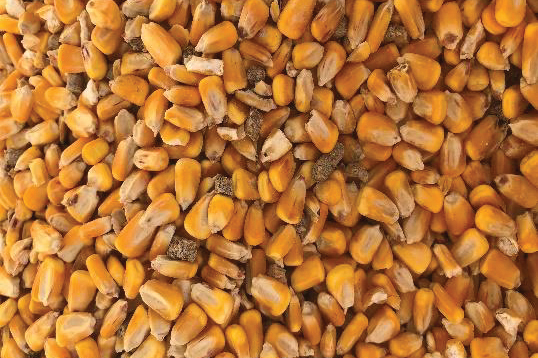
Thoroughly mix appropriate amounts of the appropriate pellet with whole shelled corn, according to feeding table to the right/below. The complete feed will look like the picture below.
| Pounds Per Ton of Each Product | |||||
| Animal Weight & Age | DB Stuff-R Grower Pellet | DB Stuff-R Finisher Pellet | Whole Shell Corn | Approx. Daily Intake Range | |
| 435–600 lb 5–7 mo | 280 | 0 | 1,720 | 12–15 lb | |
| 600–800 lb 7–9 mo | 0 | 125 | 1,875 | 15–17 lb | |
| 800–1,000 lb 9–11 mo | 0 | 110 | 1,890 | 17–20 lb | |
| 1,000–1,200 lb 11–13 mo | 0 | 90 | 1,910 | 20–23 lb | |
| 1,200–1,400 lb 13 mo–market | 0 | 80 | 1,920 | 23–27 lb | |
NEVER RUN ANIMALS OUT OF FEED
The daily intake column is just a guide, offer feed free choice so that animals never run out and expect intake to fluctuate with environment conditions.
For feeding calves smaller than 435 lb, see the Young Calf Guide two sections above.
Estimated Costs*
| Category | Calculation | Example Values | Real-Time Values |
|---|---|---|---|
| Initial Holstein Steer Cost | — | $65.00 | = ___________________ |
| Vaccines & Health Costs | Cost of vaccines × times administered | $12.00 | = ___________________ |
| Implanting | Cost of first implant × times administered | $10.00 | = ___________________ |
| Bedding (approx. $0.12/head/day) | $0.12 × 300 days | $18.00 | = ___________________ |
| Labor ($0.20/d) | $0.20 × 300 days | $37.50 | = ___________________ |
| Death loss (est. 6%) | Animal cost plus any input costs like feed, vaccines, and bedding | $5.00 | = ___________________ |
| Dry Feed Costs | Feed price per ton/2,000 × lb of that feed necessary $130/2,000 × 6,250 lb of corn = $406.25 $540/2,000 × 60 lb of Grower Pellet = $16.20 $650/2,000 × 310 lb of Finisher Pellet = $100.75 | $523.20 | = ___________________ |
| Total Estimated Costs | $1,074.20 | = ___________________ | |
| Expenses Per lb of Live Weight | $0.77 | = ___________________ | |
| Value of a 1,400 lb Holstein Steer | $1,215.00 | = ___________________ | |
| Approx. Net Profit Per Reared Calf | $141.00 | = ___________________ |
*These costs are just estimates. Market conditions continuously fluctuate for feed and live animals. Any specific economic model must be created on an individual basis. For help creating an economic model specific to your operation contact the nutritionists at NEMO Feed.
Receiving Calf Care
Using an “all-in, all-out system” provides the best opportunity to thoroughly clean barns in between groups of calves.
Preconditioning typically includes weaned before shipping, vaccinated, dehorned, castrated, implanted, and accustomed to a feed bunk. Dairy beef grower phase steers are almost always preconditioned making them healthier and easier to receive. If animals are not pre-conditioned, try to work with calf supplier to receive preconditioned calves.
Vaccination & Health Management
Most vaccination should have been done during the calf stage.
With purchased calves or calves of unknown background, to ensure protection, vaccinate promptly against IBR, PI3, BVD and BRSV, which cause shipping fever. Work with an experienced veterinarian to develop a receiving vaccination program.
Vaccinate all received calves against clostridial diseases.
Palpate scrotum and castrate the stags. Dehorn right away if not yet dehorned.
Implants are recommended. Multiple products exist so consult product label. Implanting with a long acting implant is an efficient tool to decrease re-implanting needs during growth stages.
Building Design
Housing conditions can rob average daily gain in the winter if not managed well with dairy beef. Dairy animals have thinner hides so more shelter is needed compared to traditional beef calves. Here are some tips for designing feeding facilities:
-
Minimize the amount of walking
-
Wind breaks are required during winter
-
Bedded shelter is needed to escape winter weather
Well-ventilated barns usually have one open side and sliding panels or curtains on the closed side to allow for proper ventilation. The most common cause of respiratory problems in growing cattle is not cold temperatures but high humidity due to inadequate ventilation in the housing area.
Bedding
Conventional bedding sources for growing animals are corn stalks, straw, rice hulls, and soybean stubble. The key is for the bedding to be dry so that it absorbs moisture and the animals stay dry.
Wet conditions rob daily gain. If the animals stay dry they can thrive through some extremely cold temperatures. Wet and saturated bedding will also grow many types of bad pathogens. Those pathogens stick to the animal’s hair coats, and when the animals lick each other they will ingest those pathogens leading to sick cattle.
Wet bedding also radiates ammonia which increases the risk of bovine respiratory disease (BRD).
Bedding Goals
- Dry
-
Clean
-
Provides insulation during cold weather
-
Minimizes fly nesting areas
Preconditioned and heavier dairy beef animals tend to have fewer health problems. Still, respiratory and digestive diseases can occur in cattle of all sizes. Observe steers daily for general appetite, breathing rates, and manure consistency.
Respiratory Disease / Pneumonia
Symptoms:
High temperature, coughing, rapid breathing, and lethargic actions.
Treatment:
Make sure the housing system is ventilated, but without drafts. Consult a veterinarian for antibiotic treatments. Chlortetracycline (Aureomycin®) or oxytetracycline (Terramycin®) can combat respiratory issues with veterinarian approval.
Scours
Symptoms:
Low feed intake, increased breathing, loose manure, dehydration, lethargy, poor performance, and can lead to death.
Treatment:
Follow a consistent routine for feeding and avoid anything that will lead to a slug-feeding event, such as running animals out of feed or water or locking them away from feed. Avoid cracked or ground corn—fine particles increase acidosis risk. Straw or dry hay at 2 lb per head combats acidosis, but displaces grain consumption and lowers daily gain.
Bloat
Symptoms:
Buildup of gas inside the gut organs that visually bulges the side of the animal. It can be a life-threatening condition because it prevents the animal from breathing correctly.
Treatment:
Prevention is best. Make sure feeding times are regular, provide plenty of water, and limit slug-feeding events.
Pink Eye, Foot Trouble, or Other
Symptoms:
Cloudy, runny eyes. Swollen and painful feet. Loss of appetite and body weight.
Treatment:
Provide a fresh, clean, dry environment. Eliminate mud holes. Use appropriate antibiotic therapy to control the infection/inflammation before permanent damage develops. Control flies and pathogens through sprays, tapes, and general cleanliness.
-
Fresh feed needs to be available 24 hours a day. Cattle on a no roughage feeding program should never run out of feed.
-
Make ration changes gradually over the course of a few days.
-
Proper ventilation is paramount to animal health and success of the program. This consists of dry draft free housing.
-
Clean fresh drinking water is necessary for animals to thrive.
-
Implanting these animals yields economic and performance advantages.
Our Products
- All Products
- Grower & Finisher
- Young Calf
28% DB Pellet
Concentrate blend for young calves. Designed to be mixed with oats, roasted soybeans, and whole shell corn.

30% DB Concentrate Blend
Concentrate blend for young calves. Designed to be mixed with oats and whole shell corn.
DB Stuff-R Grower Pellet
Concentrate pellets designed to be mixed with corn and DB Stuff-R Finisher pellets.

DB Stuff-R Finisher Pellet
Concentrate pellets designed to be mixed with corn and DB Stuff-R Grower pellets.
Additional Topics
| Category | Calculation | Value |
|---|---|---|
| Initial Calf (or Grower Steer) Cost | — | = ___________________ |
| Vaccines & Health Costs | (Cost of vaccines × times administered) + cost of any treatments given | = ___________________ |
| Implanting | Cost of first implant × times administered | = ___________________ |
| Bedding | (Cost of a bale × number of bales used) ÷ number of head in group | = ___________________ |
| Labor | (Hourly wage × number of labor hours per day × number of days cared for) ÷ number of head in group | = ___________________ |
| Death Loss | More difficult to calculate an exact number for, but needs to figure calf cost plus any input costs for that calf like feed, vaccines, & bedding to date Number of calves that died ÷ total number of calves initially purchased = death loss (Death loss × intial value of calves) + feed, bedding, vaccines, & other inputs | = ___________________ |
| Milk Replacer | Each calf needs a 50 lb bag of 20/20 milk replacer & that typically costs $50–$60 | = ___________________ |
| Dry Feed Costs | Feed price per ton ÷ 2,000 × lb of that feed necessary
(This is best done with multiple feeds so calculate those separately then add totals together.)
16% DB complete (price/ton) ÷ 2,000 × 380 lb of 16% = ___________________14% DB complete (price/ton) ÷ 2,000 × 640 lb of 14% = ___________________ Whole shelled corn (price/bushel) × 100 bushels of corn = ___________________ DB Stuff-R Grower Pellet (price/ton) ÷ 2,000 × 60 lb of Grower pellet = ___________________ DB Stuff-R Finisher Pellet (price/ton) ÷ 2,000 × 310 lb of Finisher pellet = ___________________ | = ___________________ |
| Birth to Finish Estimated Costs | Add together all values in the right hand columns | = ___________________ |
| Value of Fed Animal | Put in what the finished animal sells for today | = ___________________ |
| Approx. Net Profit Per Reared Animal | Value of fed animal – estimated total costs | = ___________________ |
*Stocking density, air quality, and environment conditions heavily influence these costs.
Feed That Works As Hard As You Do
Give your animals the nutrition they deserve. Find a dealer near you or schedule a consultation to ensure your animals get the nutrition they need for optimal health and performance.