Ultimate Care Horse Feed Program
At NEMO Feed, our Ultimate Care Horse Feed Program is built to support every horse—from growing foals to hardworking performance athletes and aging companions. Backed by science and powered by our exclusive Equi-lete® Technology, each feed and supplement is carefully formulated to deliver highly digestible nutrients, essential vitamins, and bioavailable minerals. With consistent, balanced nutrition and options for every stage of life, our program helps horses look, feel, and perform their best.

Complete Nutrition, Backed by Science
Formulated by experts to meet every horse’s needs—from maintenance to performance.

Consistent, Reliable Formulas
Get dependable results with feeds made to the same high standards every time.

Digestive & Immune Support
For optimum health and productivity, our team of experienced nutritionists provides us with properly formulated feed for your animals per their nutritional needs.
BODY CONDITION: SCORES OF HORSES
What is your horse’s body condition? Did you know there was a scoring system to rank your horse’s physical conditioning? What is the appropriate body condition of a horse? These questions have long been misunderstood until Dr. Don Henneke devised a scoring system for the industry. This system can be used across breeds and by all people. This system assigns a score to a particular body condition (1 to 9) as opposed to vague words such as “good,” “fair,” or “bad,” which leaves a wide interpretation.
The horse’s body condition measures the balance between the food he eats and the amount of energy he burns. Body condition can be affected by a wide variety of factors such as: availability of feed, reproductive activities, weather, level of physical activities, health problems, and feeding practices. The actual body condition of a horse can also affect its reproductive capability, performance and work function, along with endocrine and health status. Therefore, it is important to achieve and maintain a proper body condition in your horse.
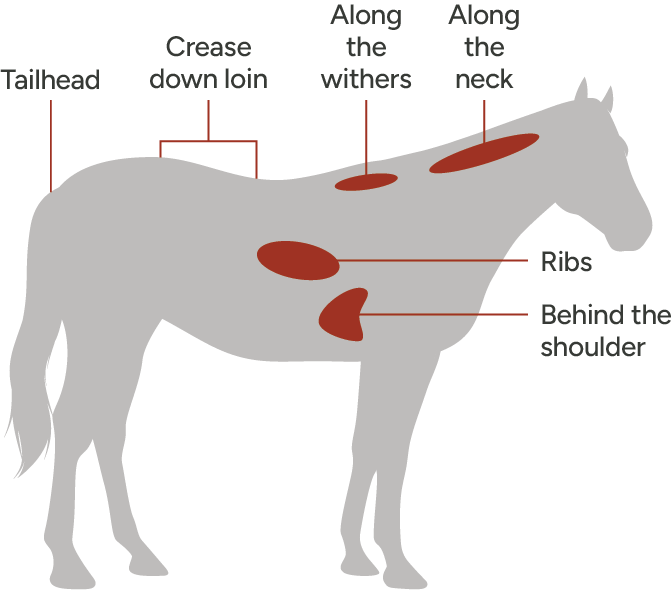
There are six areas of focus for body condition scoring in horses.
Feeding & Management
FEEDING HORSES IS AN ART THAT IS ACQUIRED FROM EXPERIENCE.
Knowledge of nutrient requirements and an understanding of the composition and use of common feeds serve as the basic information. The individuality of horses and their behavior makes it difficult to feed, maintain the proper body condition, and obtain maximum performance. A certain amount of skill, sound judgment, and experience is required for feeding horses correctly. Horses may be fed as individuals or in groups. The ration should be formulated to meet the nutrient requirements for the appropriate physiological state and should be fed accordingly. Below is an example of feeding the horse based on their physiological state.
| Physiological State | Forage % | Concentrate | Total % |
|---|---|---|---|
| Mature | 1.5–2.0 | 0.0–0.5 | 1.5–2.0 |
| Late Gestation | 1.0–1.5 | 0.5–1.0 | 1.5–2.0 |
| Lactation | 1.0–2.0 | 0.5–2.0 | 2.0–3.0 |
| Working Horses (L, M, I)1 | 0.8–2.0 | 0.5–2.0 | 1.5–3.0 |
| Growing (Weanlings) | 0.5–1.0 | 1.5–3.0 | 2.0–3.0 |
| Growing (Yearlings) | 1.0–1.5 | 1.0–2.0 | 1.8–3.0 |
1 L = Light Work; M = Moderate Work; I = Intensive Work
EQUI-LETE®: Premium Equine Nutrition
NEMO Ultimate Care Horse products utilize Equi-Lete® Technology, which offers premium equine nutrition designed to optimize your horse’s health and performance.
Features & Benefits:
- Highly bioavailable trace minerals (zinc, copper, and manganese)
- Selenium yeast, a highly bioavailable source of organic selenium
- Includes a blend of essential vitamins
- Vitamin B complex to facilitate metabolic function
- Highly bioavailable form of ocean derived calcium and magnesium
- Prebiotics, probiotics, and enzymes to maintain a healthy gastro-intestinal tract
- Includes Yucca schidigera
Our Products
- All Products
- Pelleted Feeds
- Supplements & Minerals
- Textured Feeds
Rope ‘N’ Ride 1200
A versatile, performance-supporting textured feed designed for all classes of horses, promoting coat health, endurance, and digestive balance.
Mare ‘N’ Foal 1600
A nutrient-dense formula crafted to support pregnant and lactating mares as well as growing foals, with essential amino acids and omega-3s.
Econo Horse
A cost-effective, everyday feed that delivers complete, balanced nutrition with consistent quality and support for hoof, coat, and overall health.

Performance Pellet 1200
A high-fiber, pelleted feed ideal for active horses needing sustained energy, digestive support, and reliable nutrient delivery.

Balance 2500 Pellet
A concentrated, high-protein supplement with essential amino acids and vitamins to boost performance, growth, or fill nutritional gaps in forage-based diets.
Horse Mineral
A flexible, free-choice mineral supplement fortified with Equi-lete® Technology to support herd-wide vitamin and mineral needs, especially in pasture-based diets.
Senior Horse Pellet
A pelleted senior feed with added amino acids, high fiber, and cool energy sources to support topline, digestion, and overall vitality in aging horses.
Senior Horse Granola
A textured senior feed with enhanced protein, added oils, and digestible fiber to support coat health, muscle maintenance, and gut function in older horses.
Additional Topics
Horses require routine care in order to remain healthy. A quality feeding program and good management practices are paramount to keep your horses in good condition and fit for work and breeding. For a quality feeding program to make a difference in your horse’s health, these basic management practices must be observed.
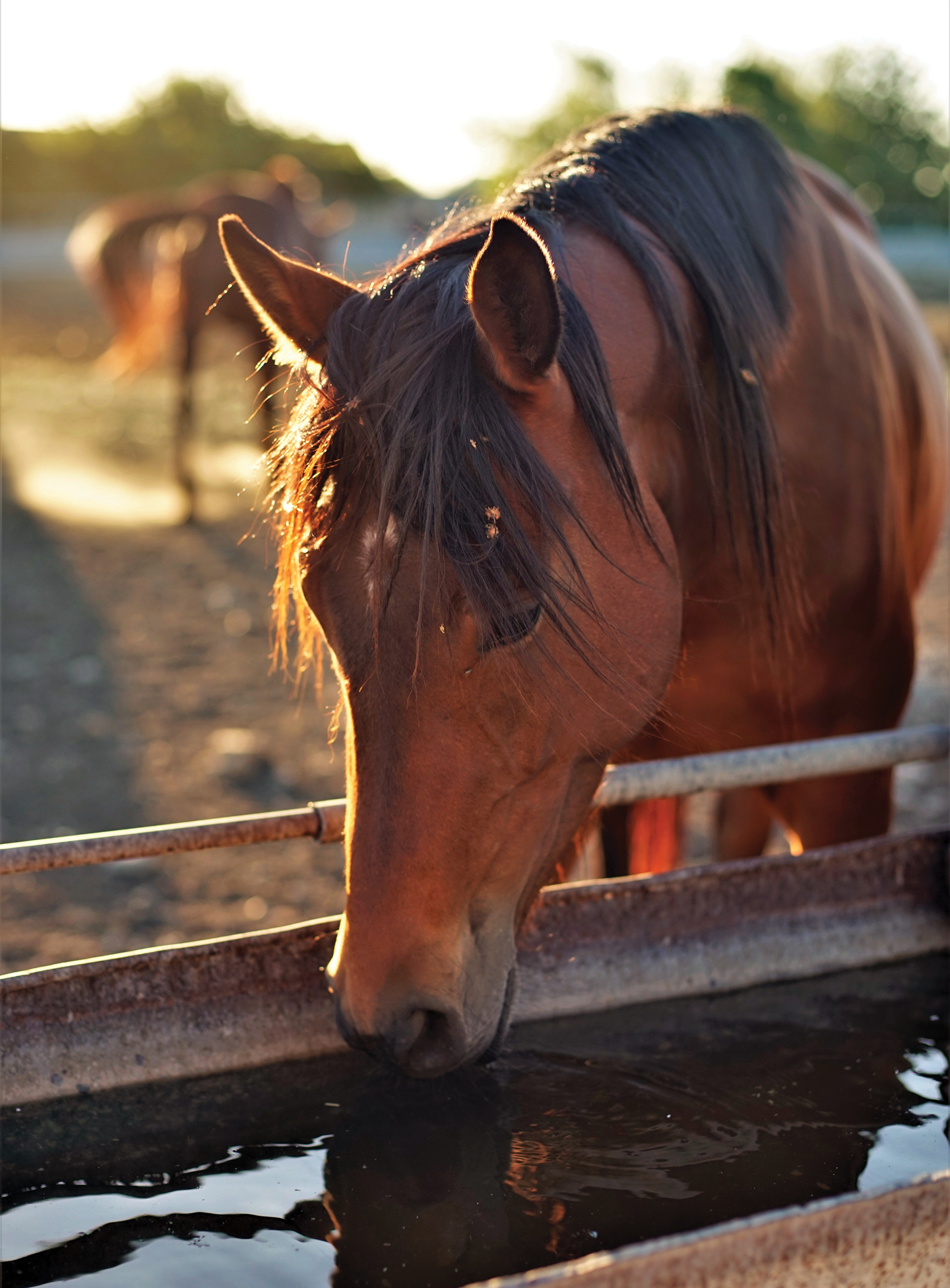
Access to Fresh, Clean Drinking Water
On average horses drink 10–15 gallons of water each day depending on temperature, humidity, feed, and workload. It is crucial for horses to have a constant source of fresh, clean water. Consider having your water checked for purity.
De-Worm Regularly
Horses are constantly exposed to parasites. Semi-annual fecal analysis can indicate horses with parasite burdens and pinpoint which anthelmintics should be used for treatment. Horses with high worm parasite burdens can appear unthrifty and manifest other serious health complications.
Provide Routine Dental Care
Horses are subject to numerous dental issues which can hinder their ability to consume and digest hay and feed. Their teeth need routine care for optimum health.
Routine Vaccinations
Pellet used to supply protein/mineral/vitamin to balance a textured grain mix that may include corn, oats, wheat, and/or barley. It contains highly digestive sources of plant proteins to promote high levels of milk production.
Access to Clean, Fresh Air
Good ventilation will help protect horses from respiratory illnesses caused by molds, pathogens, and ammonia build-up in stalls. Cleaning stalls regularly, maximizing turnout, using low-dust bedding and good quality hay will aid in keeping horses healthy.
Provide Forage & Grains That Are Free of Dust & Mold
Dust and mold in a horse’s feed can cause respiratory problems. Some molds produce mycotoxins which can cause a host of detrimental health issues when consumed.
Free Access to White Salt
Salt is critical to your horse’s health. The amount of salt needed varies with the horse’s stage of life and workload. Salt will also encourage your horse to drink more water, which is necessary for bodily functions.
The digestive tract of a horse can be sensitive to dietary changes, and any abrupt changes in your horses’ ration should be avoided. When a horse’s ration is changed due to changes in an exercise program or physiological state, that change in ration should take place gradually over a period of about a week. Sudden changes may cause colic, going off feed, loss of condition, and digestive disturbances.
One method for changing a ration is to replace 25% of the ration with the new ration every two days so that it takes six days before the horse is eating 100% of the new ration.
Horses being turned out to pasture should be turned out for 30 minutes the first day and then for increased amounts of time so that after a week, they are left out continuously. This procedure is critical when pastures are lush and green. When horses are returned back to the farm from sales or strenuous performance training, their ration and amount of exercise should be reduced gradually over a two-week period.

Gastric ulcers can affect horses of any age, including foals. Although up to 60% of performance horses and 90% of racehorses have gastric ulcers, non-performance horses can be affected as well. Horses’ stomachs secrete acid 24/7. If they are not continually grazing, the acid can create ulcers in the lining of the stomach. If your horse experiences weight loss and/or loss of appetite, poor body condition and dull coat, poor performance, change in attitude, abdominal sensitivity, or mild recurrent colic, they may have gastric ulcers.
There are both physiological & management risk factors for equine gastric ulcers.
Physiological Factors Include:
-
Horses produce acid 24 hours per day.
-
A horse can produce up to 16 gallons of acid a day.
-
Stomach acid is buffered by food and saliva.
-
Stomach pH can drop significantly when empty. Low pH can cause gastric ulcers.
Mangement Factors Include:
-
Stress: Training, hauling, strenuous exercise, changing pasture mates.
-
Stall confinement.
-
Periodic feedings, changes in feeding routine, and imposed feed deprivation.
-
More than six hours between forage meals.
-
Larger grain meals (high starch).
-
Chronic administration of non-steroidal anti-inflammatory drugs.
There are some basic management practices that can be observed to help prevent equine gastric ulcers including:
- Turnout/grazing
- Good quality hay, free choice via slow feeder or forage meals fed 4–6 times in 24 hours.
- Slow feed forage from a lower position to maximize saliva production.
- Feed buffering supplement such as Equi-lete® Physique™ or alfalfa hay.
- Minimize quantities of high carbohydrate grain meals.
- Feed forage or buffering supplements prior to exercise.
- Access to clean water.
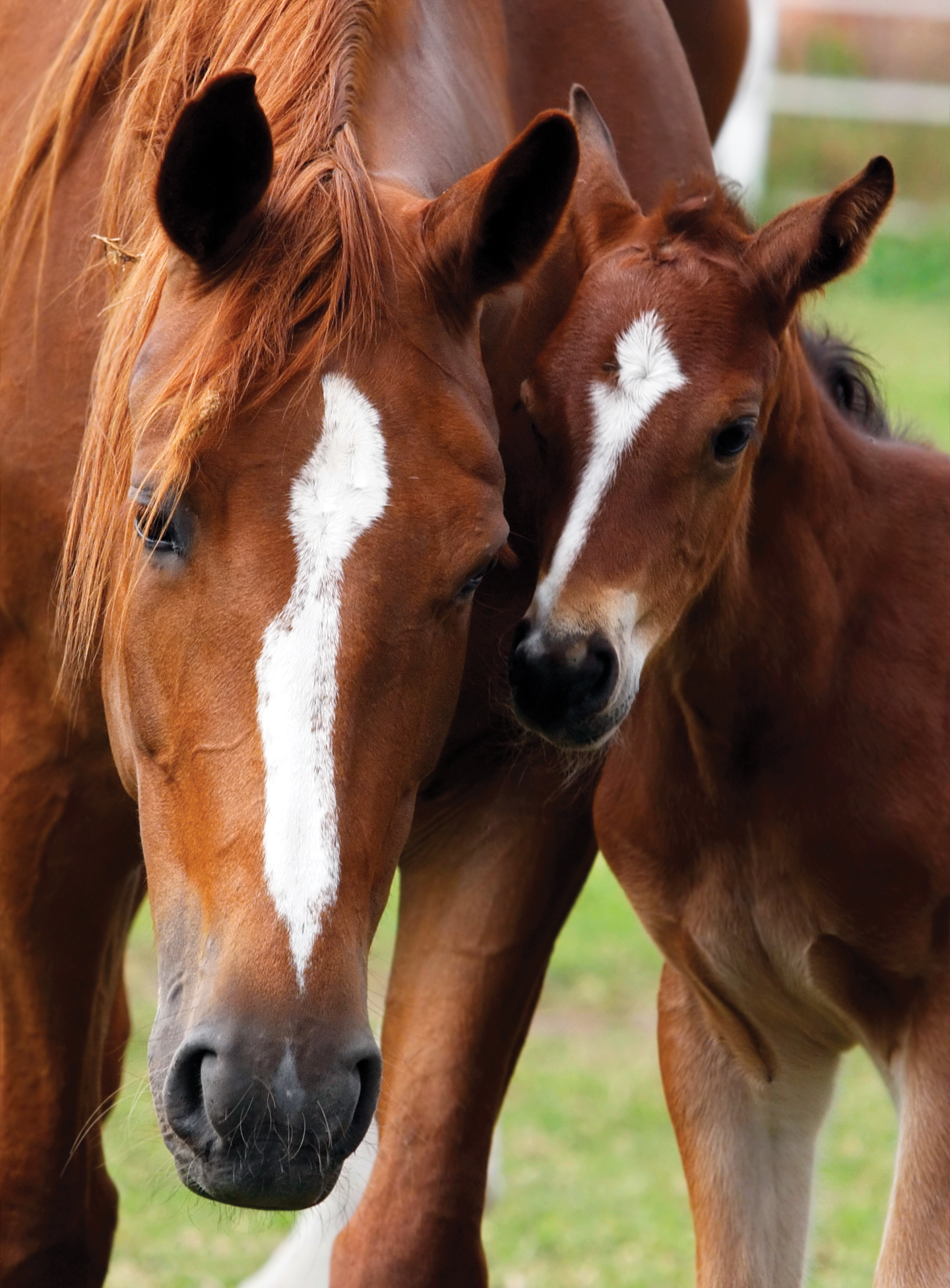
Managing feeding programs of senior horses should be based on the needs of the individual horse, body condition, activity level, chronic diseases, and dental health among other things. Nutrient requirements for senior horses vary due to their ability to digest and absorb nutrients and age-related changes in metabolism and chronic health issues.
Senior Horse Feeding Basics
- Body condition between 4–6 on the Henneke scale to minimize nutritionally related issues.
- High quality forage (highly digestible fiber).
- Fresh clean water.
- Concentrated feed designed for senior horses fed in the appropriate quantity or supplemented with additional nutrients.
- Free choice salt.
- Dental and veterinary care.
Forage
Highly digestible forage fed at a minimum of 1.5% of body weight should be the foundation of the diet. Forage extenders such as soaked hay pellets, cubes or beet pulp can be fed to horses with limited ability to chew.
Feeds
Pelleted or textured feeds formulated for the needs of the senior horse can be fed based on the horse’s ability to chew. Senior horses typically require higher crude protein feeds and/or added amino acids for muscle mass and topline maintenance. For those suffering from kidney disease lower crude protein with added lysine, methionine and threonine may be beneficial. A diet low in non-structural carbohydrates (NSC) is important for horses suffering from PPID and equine metabolic syndrome. Providing highly bio-available vitamins and minerals in age-appropriate quantities is essential due to changes in digestion.
Supplements & Additives
Additional vitamin and mineral supplements or ration balancers may be necessary if the feed is fed in quantities under recommended quantities to meet nutritional needs. Additives such as yeast culture, prebiotics and probiotics may assist with feed efficiency. Vitamin E and C may be necessary to assist as an antioxidant source promoting neurologic and immune health. Additional fat sources may be beneficial for elder horses to maintain body condition without risk associated with starches and sugars.
Age Related Disorders
It is important to evaluate the horses’ body condition and adjust their feeding program accordingly, providing diets appropriate for their needs an any adjustments due diseases or conditions they are experiencing.
Feed That Works As Hard As You Do
Give your animals the nutrition they deserve. Find a dealer near you or schedule a consultation to ensure your animals get the nutrition they need for optimal health and performance.